Last Verified: July 2026
Whether you are assembling a scaffold, reviewing drawings, estimating materials, or inspecting a jobsite, understanding scaffolding parts is one of the most important practical skills in temporary works.
In my experience, many scaffold problems do not begin with complicated engineering calculations.
They often begin with something much simpler:
- A missing ledger
- The wrong coupler
- An incorrectly installed base plate
- A damaged scaffold board
- Two similar-looking components that were never designed to work together
These mistakes may look small during material delivery or scaffold erection. However, they can lead to unstable working platforms, costly delays, failed inspections, unnecessary rework, or serious safety risks.
After more than 30 years working in scaffold design, temporary works planning, CAD drawing production, quantity estimation, and construction support, I have learned that successful scaffold projects are built on a detailed understanding of each component.
Not only its name.
Not only its size.
But also its function, compatibility, load path, and correct application.
Official safety guidance also supports this practical approach. OSHA requires scaffold users to follow general scaffold safety requirements, including capacity, access, platform, and fall protection rules. HSE also emphasizes that scaffold work must be properly planned, organized, supervised, and inspected by competent people. Safe Work Australia similarly states that scaffolds and scaffolding work must be inspected and maintained. (osha.gov)
One lesson has stayed with me throughout my career:
Knowing the name of a scaffold part is only the beginning. Understanding how that part works within the complete scaffold system is what prevents mistakes.
Quick Answer
Every scaffold is built from structural and safety components that work together to create a stable working platform.
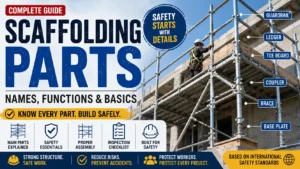
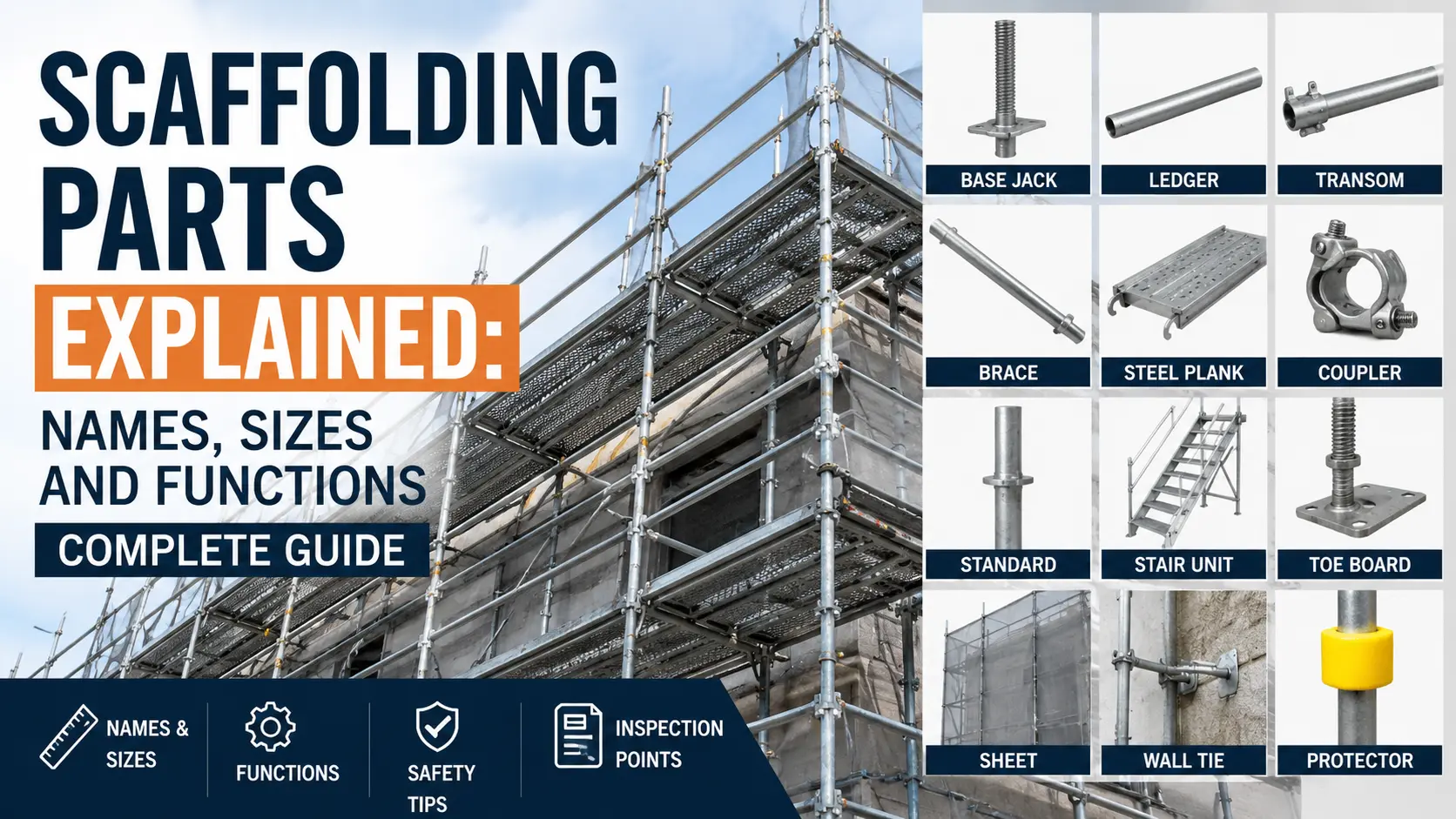
The most important scaffolding parts include:
- Base plates
- Sole boards
- Adjustable base jacks
- Standards
- Ledgers
- Transoms
- Diagonal braces
- Scaffold boards or platforms
- Guardrails
- Midrails
- Toe boards
- Couplers and connectors
- Access ladders or stair units
- Ties and anchors
Each component has a specific structural or safety function. Removing, replacing, or incorrectly installing even one part can reduce scaffold stability or create serious hazards.
Requirements vary by country, jurisdiction, and project. Always follow local laws, project specifications, and the scaffold manufacturer’s instructions.
Why Read This Guide?
Instead of simply listing scaffold components, this guide explains:
- The name and purpose of each major scaffold part
- Typical dimensions used in common scaffold systems
- How each component contributes to structural stability
- Common mistakes seen during drawing reviews and inspections
- Practical inspection points for site engineers and supervisors
- Differences between tube-and-fitting, modular, and system scaffolds
- International terminology used in construction projects
This guide is written for construction supervisors, scaffold designers, site engineers, estimators, safety officers, and project managers who need practical answers, not only definitions.
The goal is simple:
Help you understand what to check tomorrow on a real construction site.
Why This Matters
Many people think scaffold accidents are caused only by dramatic structural failures.
In reality, many problems begin earlier.
They begin during:
- Planning
- Material selection
- Drawing review
- Component inspection
- Erection preparation
- Handover checks
A scaffold is only as reliable as the individual parts used to build it.
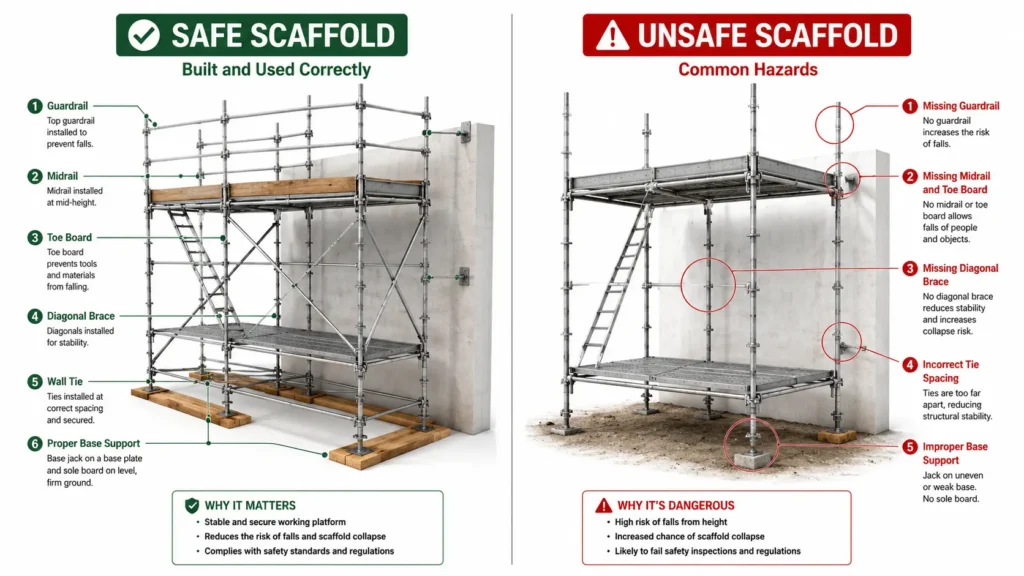
When I review scaffold drawings, I rarely find problems because someone forgot advanced engineering theory. More often, I see practical issues such as:
- Incorrect component selection
- Missing diagonal bracing
- Inadequate base support
- Incompatible scaffold systems
- Insufficient guardrail protection
- Damaged scaffold boards remaining in service
- Tie positions selected for convenience rather than stability
Most of these problems are preventable.
Safety Starts Before the Scaffold Is Built
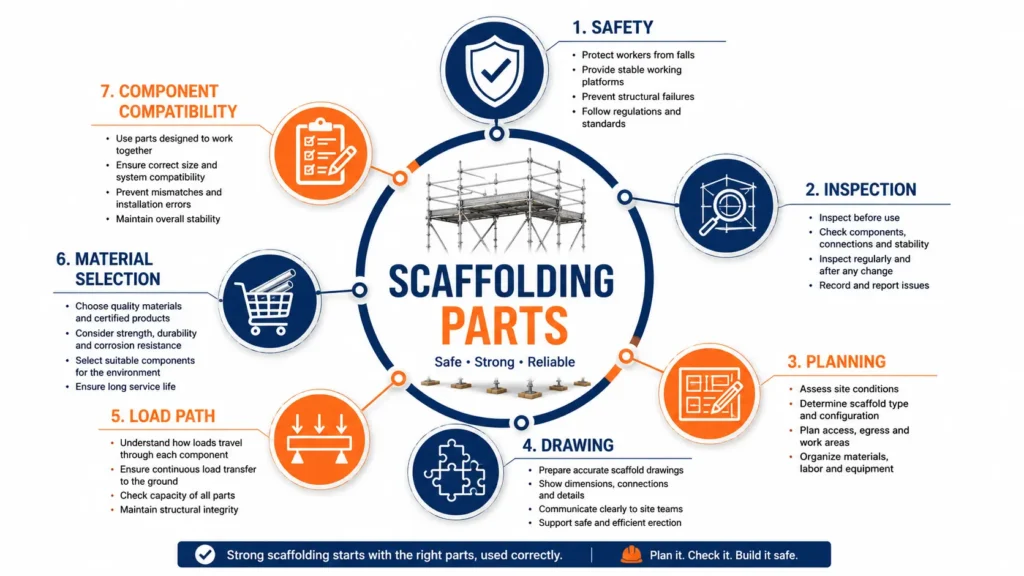
On many projects, attention naturally focuses on the erection process.
But experienced scaffold designers know that safety begins before the first standard is installed.
It begins with:
- Selecting the correct materials
- Verifying component compatibility
- Checking manufacturer specifications
- Reviewing scaffold drawings
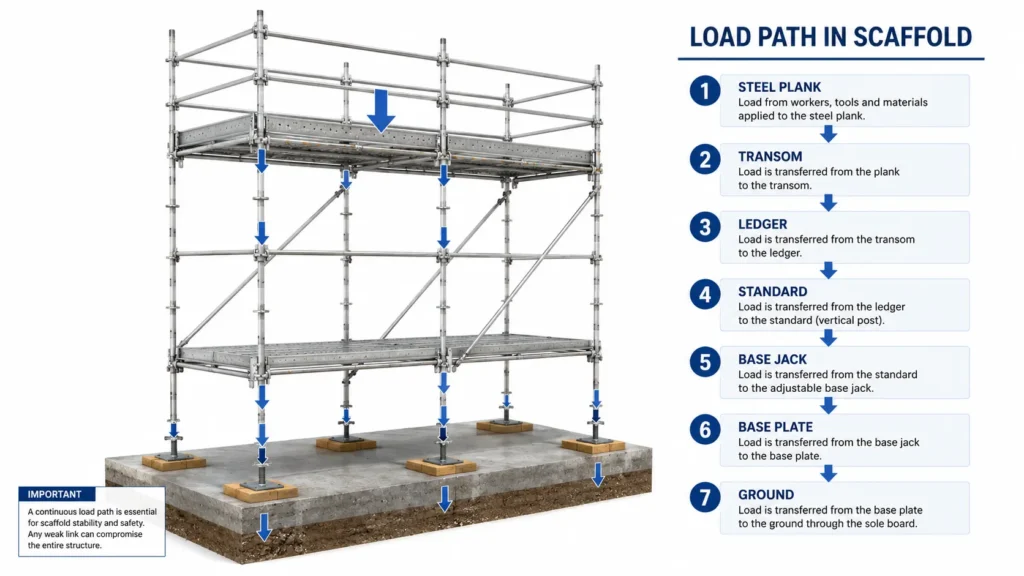
- Confirming the load path
- Understanding how each scaffold part transfers load to the ground
Even a perfectly erected scaffold cannot perform safely if unsuitable or incompatible components were selected at the planning stage.
Manufacturer guidance is also important. For example, Layher provides technical documentation, approvals, structural calculation information, brochures, and assembly and use instructions for its scaffold systems. This is a good reminder that scaffold components should not be treated as generic parts without checking the system manufacturer’s documentation. (layher.com)
Small Mistakes Become Expensive Problems
One incorrectly installed component may appear insignificant.
But on a busy construction site, a small mistake can quickly lead to:
- Work stoppages
- Additional inspections
- Material replacement
- Delayed schedules
- Increased labor costs
- Safety violations
- Loss of client confidence
From my own experience reviewing scaffold drawings, correcting a problem during design may take only a few minutes.
Correcting the same problem after scaffold erection can take several hours, or sometimes an entire day.
That difference makes component knowledge one of the highest-value skills for scaffold planners, site engineers, and safety supervisors.
Understanding Parts Improves More Than Safety
Knowing scaffold components is not only about preventing accidents.
It also improves:
- Scaffold design quality
- Material estimation accuracy
- Construction efficiency
- Inspection consistency
- Communication between engineers and scaffold crews
- Project profitability
This is especially important on international projects, where engineers, supervisors, and scaffold contractors may come from different countries and use different terminology.
A “ledger,” “transom,” “standard,” “brace,” or “tie” may be understood differently depending on the country, scaffold system, or manufacturer.
Clear terminology prevents mistakes.
Practical Knowledge Matters More Than Memorization
Many online articles simply provide a list of scaffold parts.
That may help beginners, but real construction projects require deeper understanding.
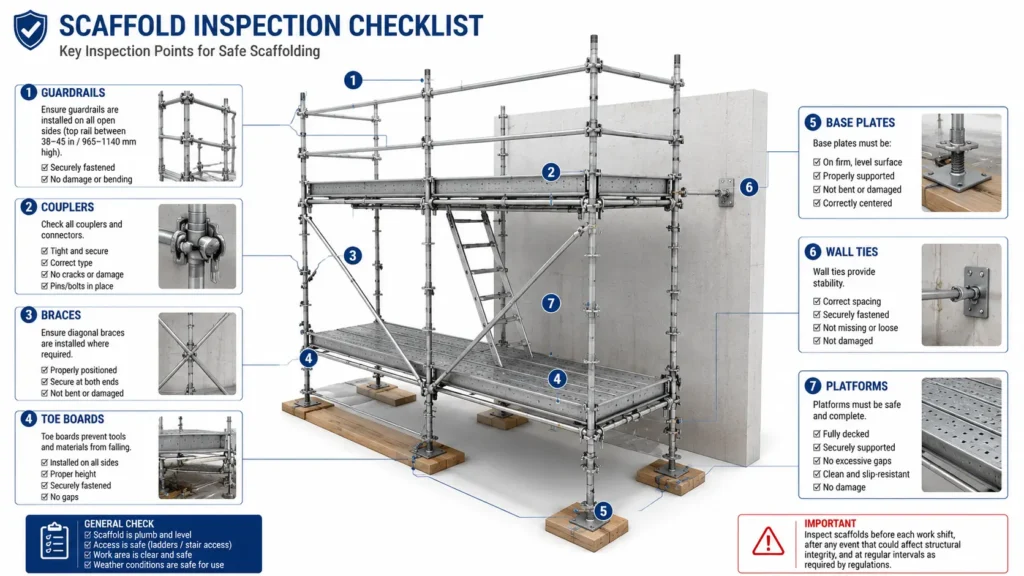
You need to know:
- Why the component exists
- When it should be used
- How it interacts with surrounding members
- What happens if it is omitted
- Which defects are commonly found during inspections
- Which points must be confirmed against the manufacturer’s instructions
Throughout this guide, I explain scaffold parts from the perspective of someone who prepares scaffold drawings, reviews temporary works, estimates materials, and supports construction projects.
Not simply from a textbook.
That practical perspective helps engineers make better decisions, reduce rework, and build scaffolds that are safer and more efficient.
Official References
The guidance and recommendations discussed in this article are supported by the following official government agencies, manufacturers, and industry resources. Always consult the latest official publications for project-specific requirements.
- OSHA – Scaffolds, 29 CFR 1926.451
https://www.osha.gov/laws-regs/regulations/standardnumber/1926/1926.451 - OSHA – A Guide to Scaffold Use in the Construction Industry
https://www.osha.gov/sites/default/files/publications/OSHA3150.pdf - HSE – Scaffolds
https://www.hse.gov.uk/construction/safetytopics/scaffoldinginfo.htm - HSE – Scaffold and Work at Height FAQs
https://www.hse.gov.uk/construction/faq-scaffold.htm - Safe Work Australia – Scaffolding
https://www.safeworkaustralia.gov.au/safety-topic/hazards/scaffolding - Layher – Official Technical Downloads
https://www.layher.com/en-de/services/downloads
About the Author
Kenzo Ishida is the founder of ISHIDA DESIGN OFFICE. With more than 30 years of practical experience in Japan, he has specialized in scaffolding design, temporary works planning, CAD drafting, quantity estimation, and construction support.
Drawing on experience from residential, commercial, and industrial projects, he shares practical insights that emphasize not only sound engineering design but also buildability, safety, and real-world jobsite application.
At Scaffold Design Hub, he combines practical experience from Japan with official guidance and technical resources from government agencies, manufacturers, and industry organizations around the world to provide reliable, practical information for construction professionals.
To learn more, visit the About page. For questions or project inquiries, please use the Contact page.