
Safety– category –
-

Sheeted Scaffolds and Wind Loads: Why Enclosures Change the Design
Learn why mesh, sheeting and other scaffold enclosures change wind loading, tie forces and design conditions—and what designers should verify. -
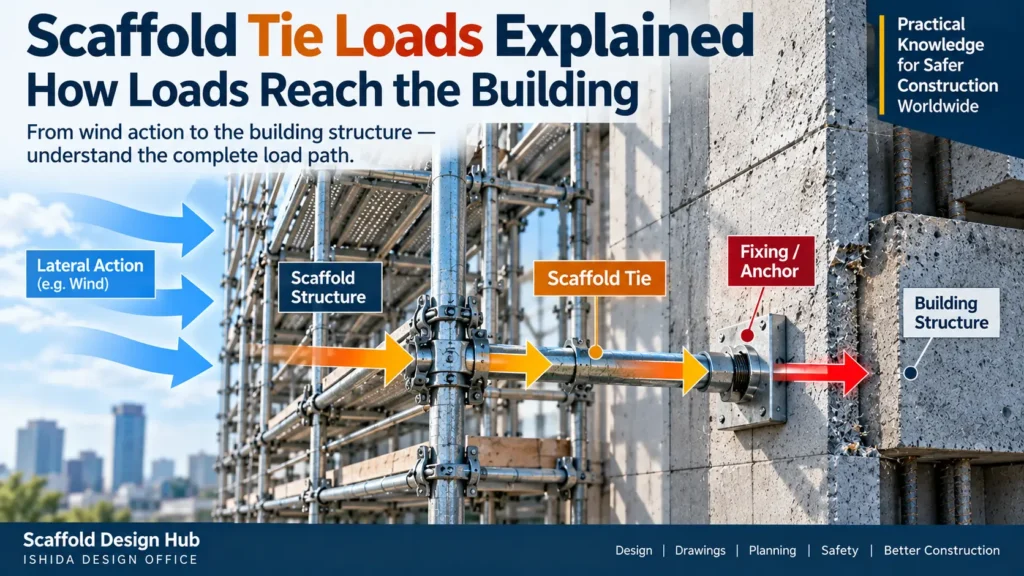
Scaffold Tie Loads Explained: How Forces Transfer to the Building
Learn how scaffold tie loads develop and transfer through ties, fixings and into the building, including the effects of wind, sheeting and tie location. -
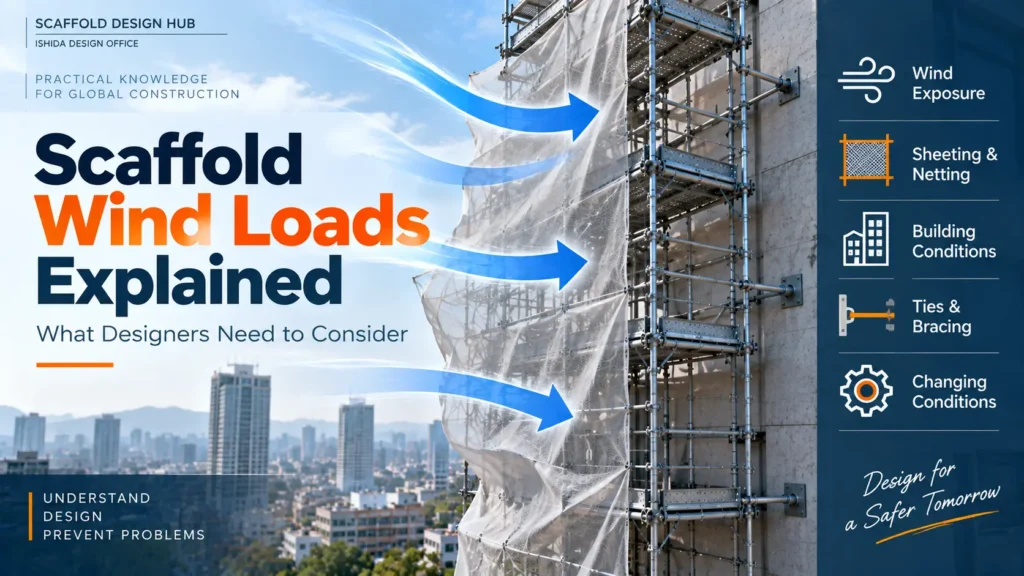
Scaffold Wind Loads Explained: What Designers Need to Consider
Learn what scaffold designers need to consider when reviewing wind loads, including sheeting, netting, ties, bracing, exposed height and temporary conditions. -
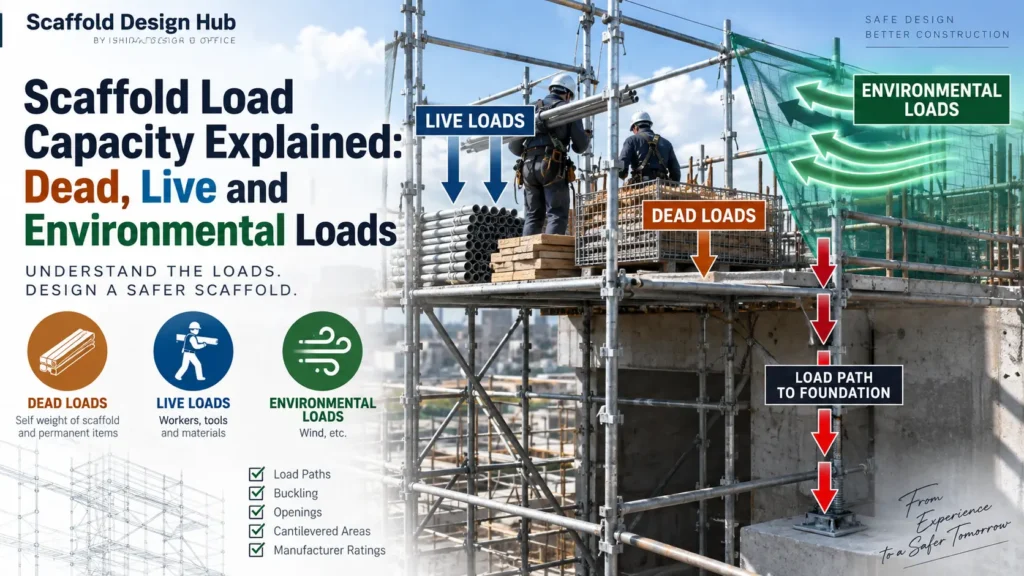
Scaffold Load Capacity Explained: Dead, Live and Environmental Loads
Learn how dead, live and environmental loads affect scaffold load capacity, load paths, buckling, openings and cantilevered areas. -
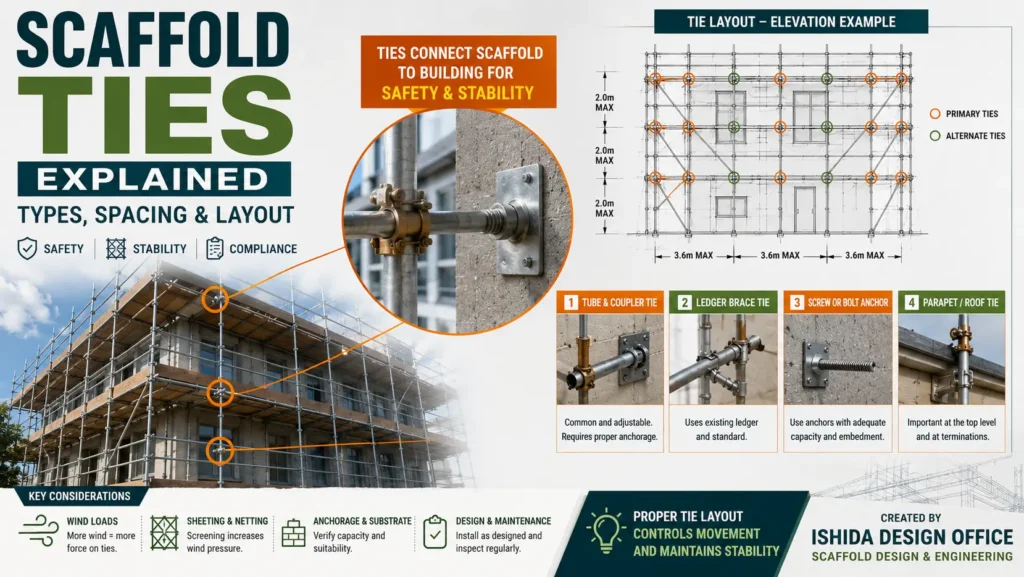
Scaffold Ties Explained: Types, Spacing & Layout
Learn how scaffold ties work, including common tie types, spacing principles, layout considerations, and practical design checks for safer and more stable scaffolding. -
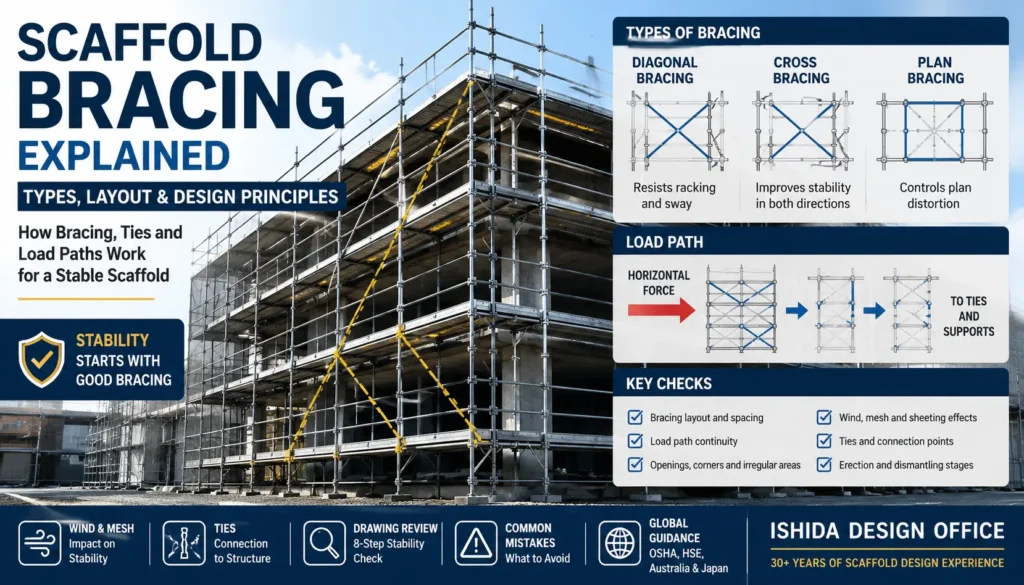
Scaffold Bracing Explained: Types, Layout & Design Principles
Learn the main types of scaffold bracing, how diagonal braces, ties and load paths work, and how to review bracing layouts for stability. Practical guidance based on 30+ years of scaffold design experience.

1